
Incorrect Electrode Tip Dressing
Definition
Electrode dressing is a manual or automated operation to reshape electrodes or resurface their uneven faces after they have become worn.
Description
With time, the electrode tip faces wear or become mushroomed (see Fig. 1). This modifies current flow through the workpiece and therefore the formation of the weld. Wear can be compensated for by periodically increasing (stepping) the weld current, but once the tips have reached a certain level of wear, they must be either replaced or dressed. Dressing is normally carried out with a special rotating cutter, and the process restores the electrodes to the nominal tip face diameter, and usually removes the tips’ pitted surfaces. (In certain cases the process may not require the resurfacing of the tip face).
Incorrect dressing may result in a number of defective conditions (see Fig. 2):
- wrong tip diameter
- nonparallelism of tip faces
- tips closing in the wrong plane
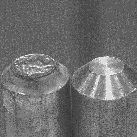
Fig. 1. Mushroomed and pitted tip (left) compared with a new tip (right).
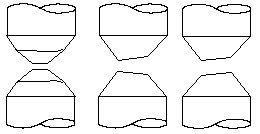
Fig. 2. Examples of the effects of incorrect dressing: dressed to wrong diameter (left), nonparallelism (middle), wrong plane (right).
Detection
Any of the following weld issues may indicate that tip dressing has not been carried out properly:
- Brittle Weld
- Cracks and Holes
- Excessive Indentation
- Expulsion/Burn Through
- Inconsistent Weld Quality
- Missing Weld
- Nonround Weld
- Poor Class A Appearance
- Sticking/Stuck Tips
- Stuck Weld
- Undersized Weld
- Uneven weld indentation
- Visual inspection of the electrode faces after dressing
Significance
Quality, Workplace Issues, Cost, Downtime, Maintenance and Throughput (cycle time; PPH) are all potentially affected by this condition.
Subordinate Causes
- Incorrect robot programming
- Insufficient dresser operator training
- Blunt cutter
- Wrong cutter
- Tip dresser not working
Need a new tip dresser? Check out our in-stock electrode tip dressers.
