Expulsion/Burn Through
Definition
Expulsion is the forceful ejection of molten metal from the spot weld. Severe expulsion may eject enough material to create a through-hole in the workpiece, commonly termed “burn through”.
Description
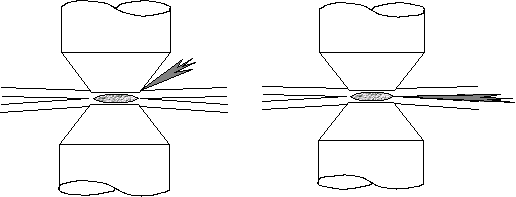
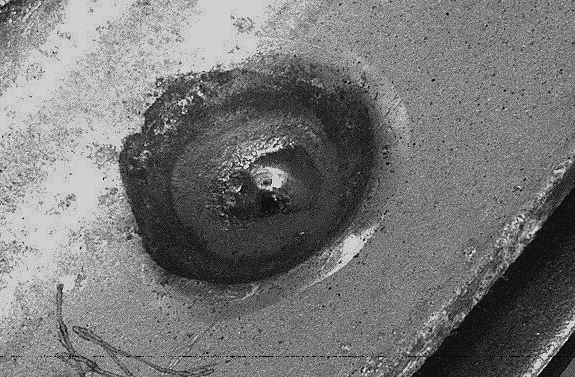
Expulsion may occur at any interface, i.e. at the tip to workpiece interface. (Fig. 1), or at any faying surface (Fig. 2). Expulsion is caused by lack of containment of the expanding molten material between the electrode tip faces, and excessive expulsion is undesirable. Spikes of solidified expulsion extending from the circumference of a weld are called whiskers or burrs and are also to be avoided. Burn Through (Fig. 3) occurs when so much material is expelled that a hole is left that passes completely through the weld.
Detection
- Ejection of visible molten material during the weld
- Post weld inspection for holes, burrs/whiskers
Significance
Quality, Workplace Issues, Cost, Downtime, Maintenance, Throughput (cycle time; PPH) are all potentially affected by this condition. Special considerations are noted below:
- Quality: Expulsion at the weld interface may displace or damage adhesives and sealers. Whiskers may prevent the installation of seals, or may damage them during installation. Corrosion is more likely to occur when burrs/whiskers are present.
- Maintenance: Accumulation of weld expulsion on tooling and equipment, may cause machine malfunction.
Possible Causes
Strong Possibilities
- Excessive Sealer
- Poor Electrode Follow-up
- Poor or Varying Part Fit-up
- Weld Current High
- Weld Flange Too Small
Weak Possibilities
- Damaged Part
- Defective Air or Hydraulic System
- Dirty Material
- Electrode Face Not Parallel to Workpiece
- Electrode Skidding/Sliding
- Electrode Wear
- Hold Time Short
- Inadequate Electrode Alignment
- Incorrect Cylinder
- Incorrect Electrode Dressing
- Incorrect Hoses
- Incorrect Material/Coating
- Incorrect Workpiece Selected
- Poor Mechanical Connection
- Squeeze Time Short
- Weld Force Low
- Weld Time Long
- Weld Wrongly Located
- Wrong Shank
- Wrong Tips
- Wrong Transformer