
Can You Resistance Weld It? Steel and Stainless Steel
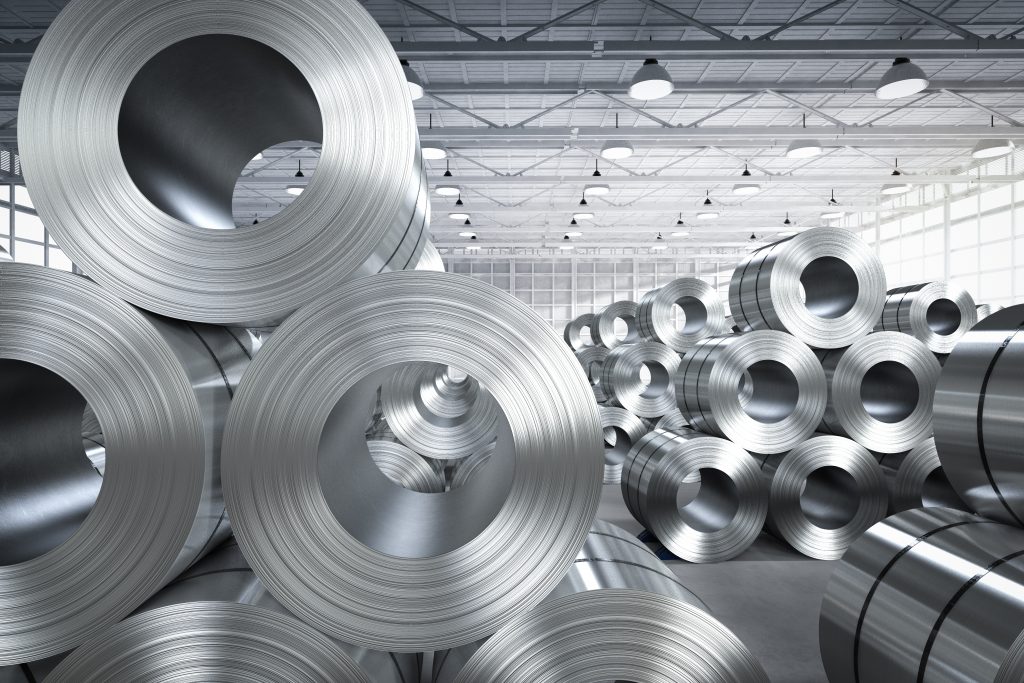
Yes! Steel and stainless steel are among the easiest and most reliable materials for resistance welding.
If you’re manufacturing with steel or stainless steel, you’re working with an ideal material for resistance welding. These two metals help set the standard that all other materials are measured against. Here’s what you need to know.
Carbon and Low-Alloy Steels: The Gold Standard
Low carbon steel is the easiest material to resistance weld.
Why It Works So Well
- Wide plastic range (~540°C) gives you a forgiving process window
- Moderate electrical resistance generates perfect heat at the weld interface
- Consistent properties across suppliers and batches
- Minimal surface preparation required
| Electrode Diameters and Shape | Recommended Minimum Standard Electrode Size |
Weld Force (Lbs.) |
Weld Time (Cycles) 60 Cycles per Sec. Time Min. |
Hold (Cycles) |
Welding Current (Amps.) Approx. |
Weld Shear Strength (For Steels Having Ultimate Tensile Strength of 90,000 psi and below) Minimum Strength (Lbs/Weld) |
Diameter of Fused Zone (Approx.) Dw (Inches) |
Minimum Weld Spacing S (Inches) |
Minimum Contacting Overlap L (Inches) |
|||
|---|---|---|---|---|---|---|---|---|---|---|---|---|
| Thickness of Thinnest Outside Piece (Inches) |
Flat Face | Radius Face Radius R (Inches) |
||||||||||
| Maximum D (Inches) |
Min. D (Inches) |
|||||||||||
| 0.010 | 0.125 | 1/2 | 2 | 4RW 1MT | 160 | 4 | 5 | 4,000 | 130 | 0.113 | 1/4 | 3/8 |
| 0.021 | 0.187 | 1/2 | 2 | 4RW 1MT | 244 | 6 | 8 | 6,500 | 300 | 0.139 | 3/8 | 7/16 |
| 0.031 | 0.187 | 1/2 | 2 | 4RW 1MT | 326 | 8 | 10 | 8,000 | 530 | 0.161 | 1/2 | 7/16 |
| 0.040 | 0.250 | 5/8 | 3 | 5RW 2MT | 412 | 10 | 12 | 8,800 | 812 | 0.181 | 3/4 | 1/2 |
| 0.050 | 0.250 | 5/8 | 3 | 5RW 2MT | 554 | 14 | 16 | 9,600 | 1,195 | 0.210 | 7/8 | 9/16 |
| 0.062 | 0.250 | 5/8 | 3 | 5RW 2MT | 670 | 18 | 20 | 10,600 | 1,717 | 0.231 | 1 | 5/8 |
| 0.078 | 0.312 | 5/8 | 3 | 5RW 2MT | 903 | 25 | 30 | 11,800 | 2,355 | 0.268 | 1-1/8 | 11/16 |
| 0.094 | 0.312 | 5/8 | 4 | 7RW 3MT | 1,160 | 34 | 35 | 13,000 | 3,054 | 0.304 | 1-1/4 | 3/4 |
| 0.109 | 0.375 | 7/8 | 4 | 7RW 3MT | 1,440 | 45 | 40 | 14,200 | 3,672 | 0.338 | 1-5/16 | 13/16 |
| 0.125 | 0.375 | 7/8 | 4 | 7RW 3MT | 1,760 | 60 | 45 | 15,600 | 4,300 | 0.375 | 1-1/2 | 7/8 |
| 0.156 | 0.500 | 7/8 | 6 | Male or Female Threaded | 2,500 | 93 | 50 | 18,000 | 6,500 | 0.446 | 1-3/4 | 1 |
| 0.187 | 0.625 | 1 | 6 | Male or Female Threaded | 3,340 | 130 | 55 | 20,500 | 9,000 | 0.516 | 2 | 1-1/2 |
| 0.250 | 0.750 | 1-1/4 | 6 | Male or Female Threaded | 5,560 | 230 | 60 | 26,000 | 18,000 | 0.660 | 4 | 1-1/2 |
Notes:
- Low Carbon Steel as hot rolled, pickled, and slightly oiled with an ultimate strength of 42,000 to 45,000 PSI Similar to SAE 1005—SAE 1010.
- Electrode Material is RWMA Class 2.
What About Thicker Steel?
For material up to 3mm thick, you’ll typically need:
- Higher currents (commonly up to 20,000 amperes)
- Increased electrode force (often up to 8 kN)
- Longer weld times
- Possibly water-cooled electrodes
The Bottom Line: If you’re welding mild steel, your biggest challenge will be maintaining consistent electrode condition, not the material itself.
Stainless Steel: Slightly More Demanding
All common stainless steel grades can be resistance welded, but they require more attention than carbon steel.
The Three Main Types
300-Series Austenitic (304, 316)
Weldability: Excellent
- Most commonly welded stainless steel
- Higher electrical resistivity than carbon steel generates more heat per unit current
- Narrow plastic range demands precise current control – small process window
- Current: Typically 8,000-11,000 amperes (1mm material) – similar to carbon steel
- Critical consideration: Tighter control needed to prevent overheating and carbide precipitation
Multiple research studies on 304 stainless steel spot welding show current ranges varying from 8-15 kA for thin materials, generally comparable to carbon steel requirements.
400-Series Ferritic (430, 409)
Weldability: Very Good
- Similar to carbon steel in behavior
- Excellent for automotive exhaust applications
- Less prone to cracking than austenitic grades
- Current: Generally similar to carbon steel (approximately 9,000-11,000A for 1mm)
400-Series Martensitic (410, 420)
Weldability: Good (with precautions)
- Requires post-weld heat treatment to prevent cracking
- Preheat may be necessary for thick sections
- Best suited for applications where you can control cooling rates
- Consider alternative joining methods if heat treatment isn’t feasible
Special Considerations for Stainless: Surface Contamination Matters More
- Oil, grease, and oxides significantly degrade weld quality
- Clean surfaces before welding (acetone or mild alkaline cleaner)
- Don’t use wire brushes that have touched carbon steel
Electrode Wear
- Stainless steels are harder on electrodes than carbon steel
- Expect more frequent electrode dressing
- RWMA Class 2 electrodes work well for most applications
- Consider Class 3 for high-volume production
Note: Industry research indicates approximately 8,000 welds can be achieved in low-carbon steel or 3,000 welds in galvanized steel without dressing electrodes, though actual life varies significantly by application.
Galvanized and Coated Steels
Weldability: Good (but requires adjustments)
Zinc coatings complicate resistance welding but don’t prevent it. Here’s what changes:
Galvanized (Hot-Dip and Electrogalvanized)
- Typically requires moderately higher current compared to bare steel to compensate for the zinc coating’s effect on contact resistance. Specific percentages vary by coating type, thickness, and application. Use higher electrode force to break through coating
- Expect faster electrode degradation (zinc alloys with copper)
- Plan for more frequent electrode maintenance
- Weld quality: Slightly reduced but acceptable for most applications
Industry sources note that galvanized coating reduces contact resistance, requiring more current or time to compensate. Specific adjustments vary by coating type and thickness.
Galvanneal
- Slightly better than pure galvanized
- Coating is more stable at welding temperatures
- Less electrode contamination
Zinc-Nickel and Other Alloy Coatings
- Generally weld better than pure zinc
- Still require parameter adjustments
- Consult your coating supplier for specific recommendations
High-Strength and Advanced High-Strength Steels (AHSS)
Weldability: Excellent to Good
Modern automotive manufacturing relies heavily on these materials:
Dual-Phase (DP) Steels
Weldability: Excellent
- Require less current than mild steel (due to higher electrical resistivity)
- Typically require 20%+ higher electrode force
- May need longer weld times
AHSS welding guidelines recommend starting with mild steel schedules, then increasing electrode force by 20% or more while maintaining or reducing current levels. Specific adjustments depend on material grade and thickness.
TRIP Steels
Weldability: Excellent
- Similar parameters to DP steels
- Lower current, higher force than mild steel
- Consistent weld quality
Martensitic Steels
Weldability: Good
- Lower current requirements than mild steel
- Higher electrode force needed
- Watch for reduced ductility in heat-affected zone
- May need larger weld nuggets for equivalent strength
Hot-Stamped Boron Steels (Press-Hardened Steel)
Weldability: Good (with careful control)
- Aluminum-silicon coatings require special attention
- Coating acts as initial insulator – use current ramping or pulsing
- Lower base current than mild steel once through coating
- Higher force required
- Common in automotive B-pillars and roof rails
Engineering Note: These materials are specifically designed to be weldable. Key adjustment: use lower current but higher force than mild steel. According to the AHSS Guidelines, “AHSS require less current than conventional mild steel or HSLA because AHSS have higher electrical resistivity.” If you’re having trouble, it’s almost always a parameter or surface condition issue, not a material limitation.
Tool Steels and Special Alloys
Tool Steels (O1, A2, D2)
Weldability: Fair to Poor
- High carbon content causes cracking
- Requires preheat and post-weld heat treatment
- Consider alternative joining methods (brazing, mechanical fastening)
Maraging Steels
Weldability: Good
- Can be welded in solution-treated condition
- Age-harden after welding
- Excellent for aerospace applications
Quick Reference: Steel Weldability Chart
Note: This chart provides general guidance. Specific parameters vary by material thickness, equipment, and application requirements.
| Material Type | Weldability | Key Consideration | Parameter Adjustment |
| Low Carbon Steel | Excellent | Electrode maintenance | Baseline parameters |
| High Carbon Steel (>0.3%) | Fair | Cracking risk | Preheat required |
| 300-Series Stainless | Excellent | Narrow plastic range | Similar current, tighter control |
| 400-Series Ferritic SS | Very Good | Grain growth | Similar to carbon steel |
| 400-Series Martensitic SS | Good | Heat treatment needed | Controlled cooling |
| Galvanized Steel | Good | Electrode wear | +10-25% current |
| AHSS (DP, TRIP) | Excellent | HAZ properties | Lower current, higher force |
| Hot-Stamped Boron | Good | Coating interference | Current ramping through coating |
Common Issues and Solutions
Issue: Inconsistent Weld Quality on Galvanized Steel
Solution: Increase electrode maintenance frequency. Zinc buildup causes rapid degradation. Consider dressing electrodes every 500-1000 welds instead of standard 2000-3000 (varies by coating thickness and production rate).
Issue: Cracking in Stainless Steel Welds
Solution: Reduce heat input. Your weld time or current is likely too high. Stainless has a narrow plastic range – try backing off 10-15% and test incrementally.
Issue: Weak Welds in AHSS
Solution: You may need a larger weld nugget. Try increasing current or time in small increments. These materials typically need approximately 4.5-5.5 mm nugget diameter (versus approximately 4.0 mm for mild steel), though requirements vary by grade.
When to Call for Engineering Support
Contact Production Engineering if you’re experiencing:
- Consistent weld failures after parameter optimization
- Unusual electrode wear patterns
- Need to weld materials thicker than 3mm
- Mixed material combinations (steel to stainless)
- High-volume production startup (>100,000 welds/year)
The Bottom Line for Manufacturers
Steel and stainless steel are resistance welding success stories. If you’re having problems welding these materials, the issue is almost always:
- Surface contamination
- Incorrect parameters
- Electrode condition
- Equipment calibration
Not the material itself.
These metals are forgiving, well-understood, and supported by decades of industrial experience. This is why resistance welding dominates automotive, appliance, and metal fabrication industries.
Need Help With Your Specific Application?
Production Engineering has 75+ years of experience with steel and stainless steel resistance welding. Whether you’re setting up a new production line or troubleshooting existing welds, we can help you optimize your process.
Additional Resources
For more detailed welding parameters and specifications:
- AWS C1.1 Recommended Practices for Resistance Welding – Comprehensive industry standard with detailed welding schedules (available for purchase)
- AHSS Guidelines – Advanced high-strength steel welding resources from WorldAutoSteel (free access)
- RWMA Information – Resistance Welder Manufacturers’ Association resources
- How to Resistance Weld – Technical Q&A database (free access)
Disclaimer: This article provides general guidance based on industry technical publications, equipment manufacturer specifications, and peer-reviewed research. Specific welding parameters should be developed and qualified for each application. Consult material suppliers, equipment manufacturers, or PESCO’s engineering team for application-specific recommendations.